

The data from Spring Festival 2025 confirms what many in the industry anticipated: Chinese outbound tourism is experiencing a remarkable resurgence. With cross-border travel orders surging by 30% YoY and outbound tourist numbers increasing by 76%, the market has accelerated its recovery.
While short-haul trips to Japan doubled, long-haul destinations are also thriving. Growth rates for travel to the US, Spain, Italy, and France ranged between 50% and 82%. For businesses in Europe and the US, the stakes are high: the estimated per capita consumption for these long-haul trips sits between 30,000 and 50,000 RMB (approx. €4,000–€6,600).
If you are a business outside of China serving these travelers, how do you stand out? The answer lies in meeting them where they live digitally: WeChat.
Why WeChat is the Key Clienteling Channel?
Chinese travelers are digitally sophisticated. While travel apps are used for news and promotions, and Alipay is dominant for payments and tax refunds, WeChat remains the most ideal channel for comprehensive service.
From luxury retail to transportation, integrating WeChat Mini-Programs allows businesses to bridge the digital divide, removing language barriers and payment friction.
1. Revolutionizing the Retail Experience
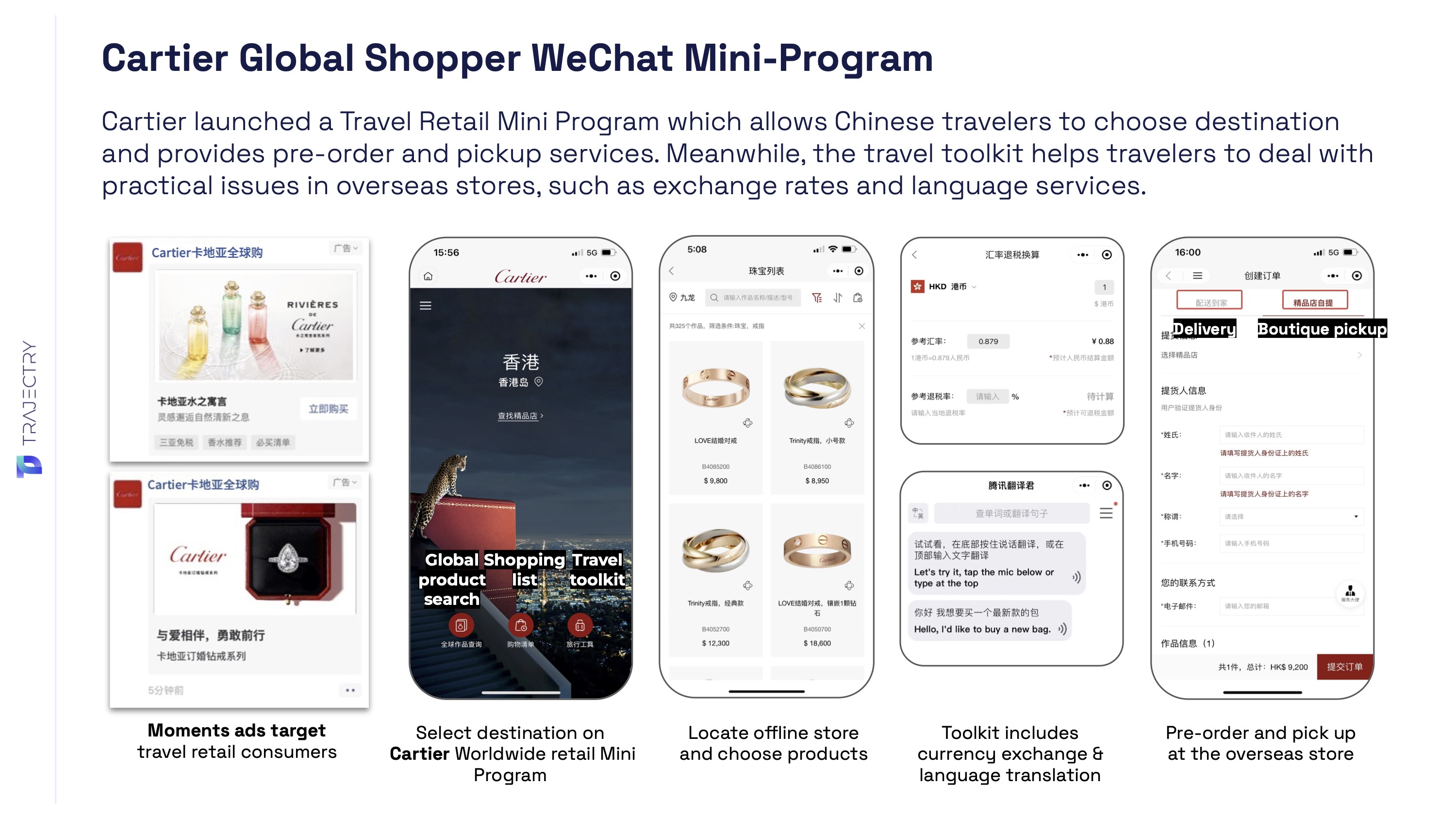
According to McKinsey, 47% of Chinese tourists view shopping as an important agenda, with 62% purchasing products unavailable in China. To capture this spending, leading brands like Bulgari, Zegna, and Bucherer have utilized "Global Shopping Service" Mini-Programs that cover the entire customer journey.
• Before Travel: Travelers can locate stores, check prices, create wishlists, and make reservations.
• During Travel: In-store features include product browsing in Chinese, currency conversion, translation tools, and linking sales to membership accounts,.
• After Travel: Customers can access after-sales policies and contact client advisors for re-purchases.
2. Department Stores & Outlets: The All-in-One Experience
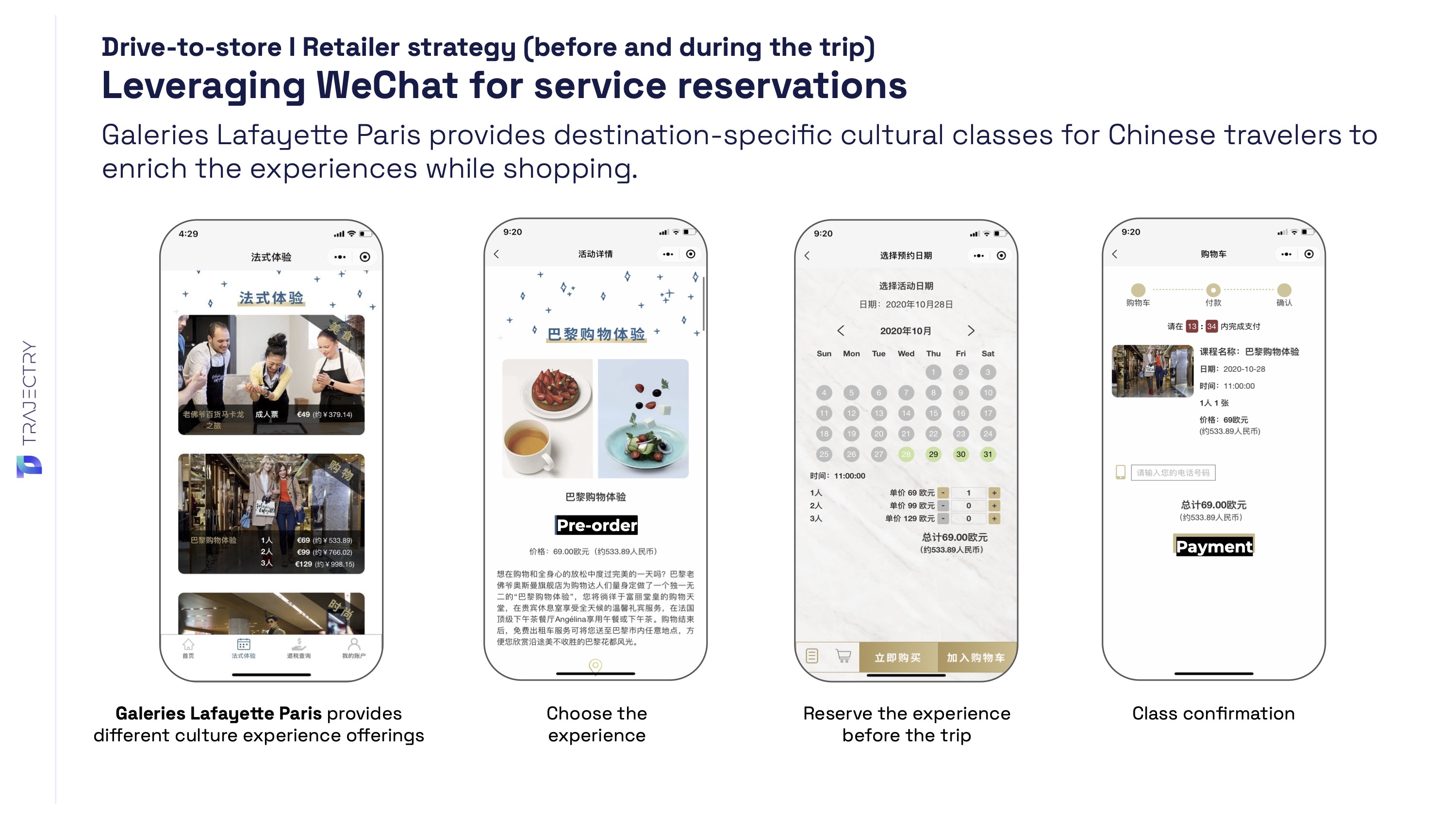
Chinese travelers possess in-depth knowledge of global retail giants - often referring to Harrods, Galeries Lafayette, or Macy's by their Chinese nicknames. Because these visits often last hours and include dining and entertainment, reducing friction is crucial.
To ensure a seamless experience for customers with limited local language skills, businesses must combine offline assets (Chinese signage, bilingual staff) with online solutions. A WeChat Mini-Program can guide a shopper through a massive department store, help them find products quickly, and process tax refunds onsite, ensuring they return again and again.
3. Travel Retail: Airport and Duty-Free Solutions
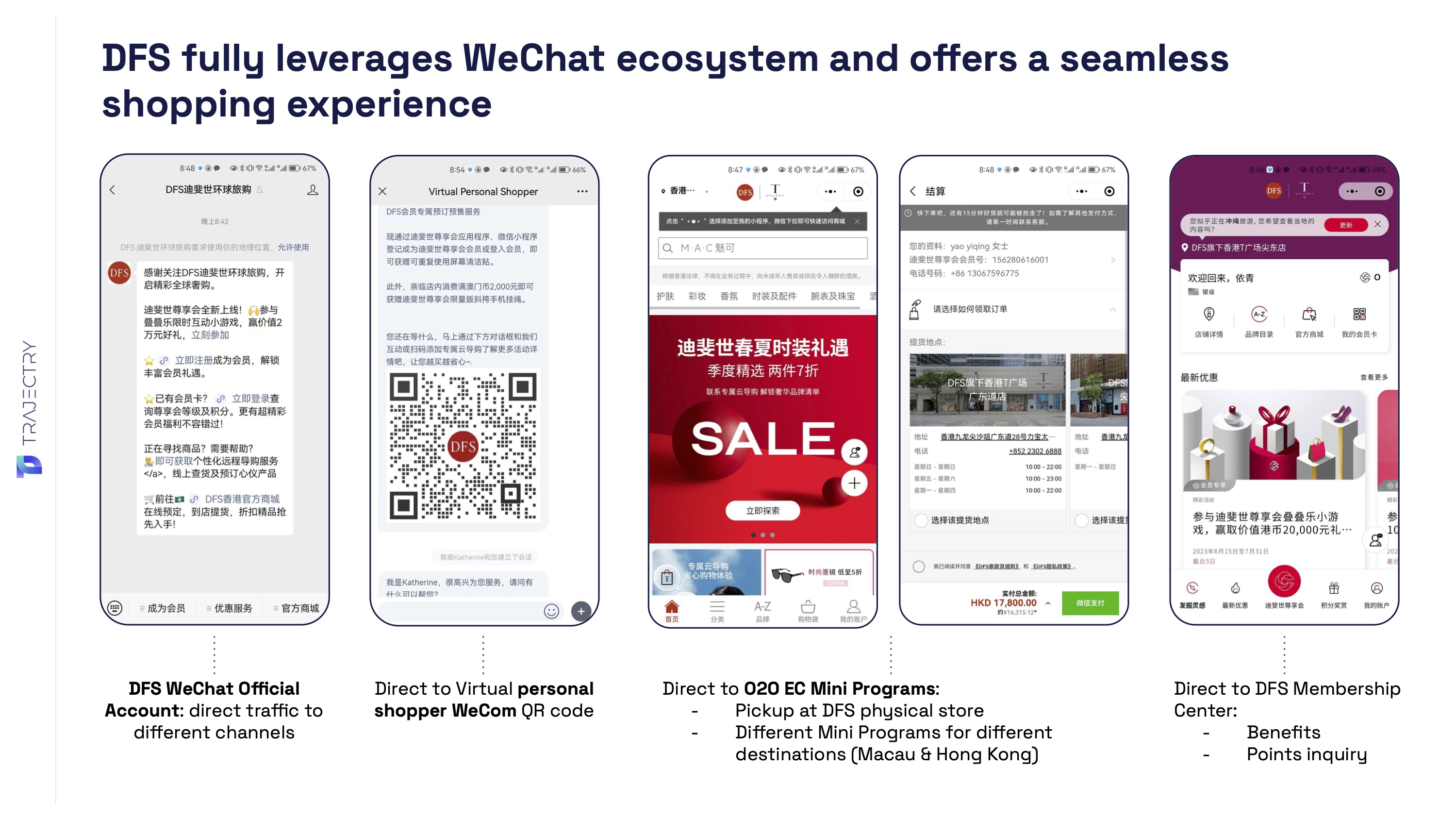
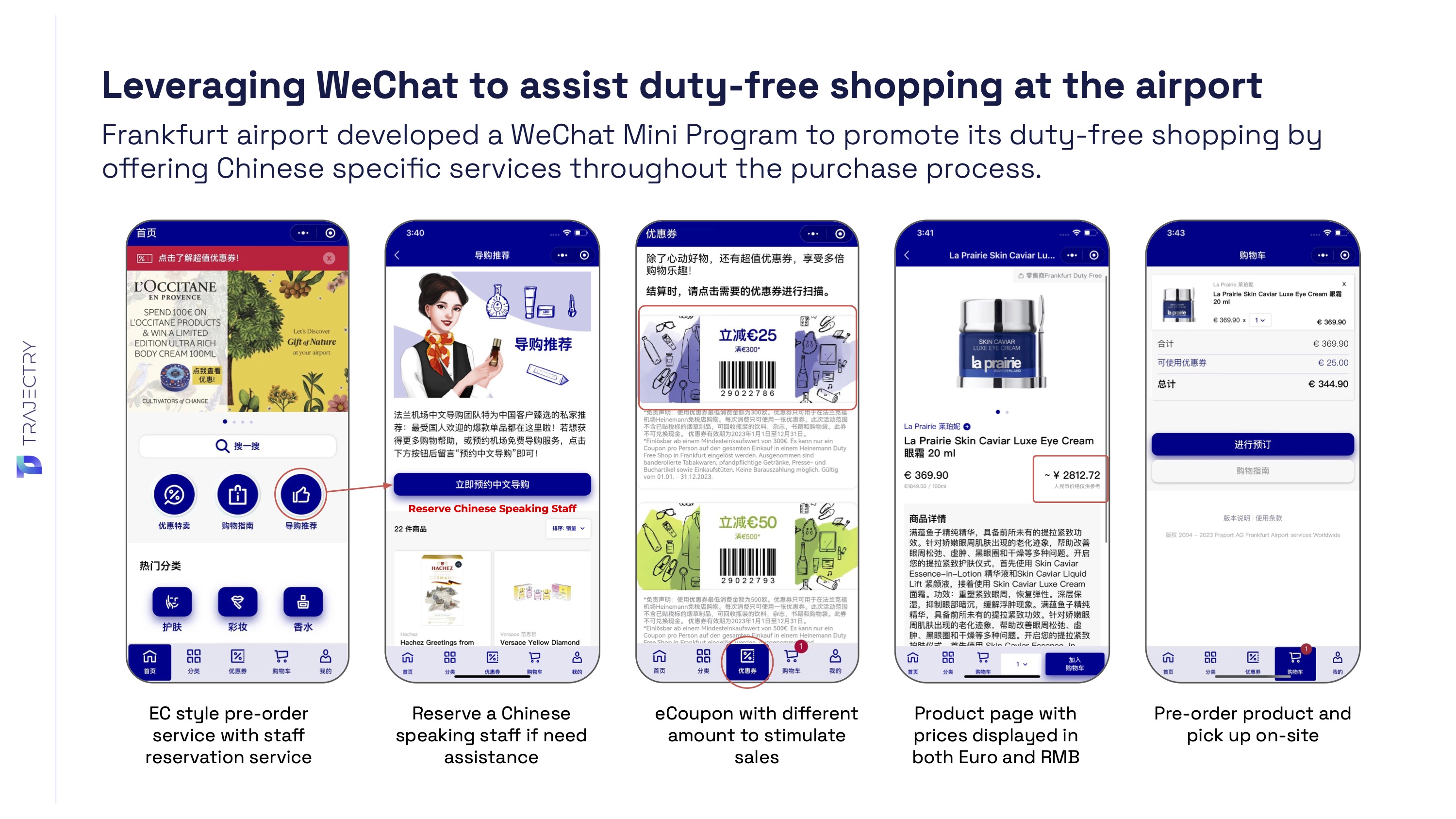
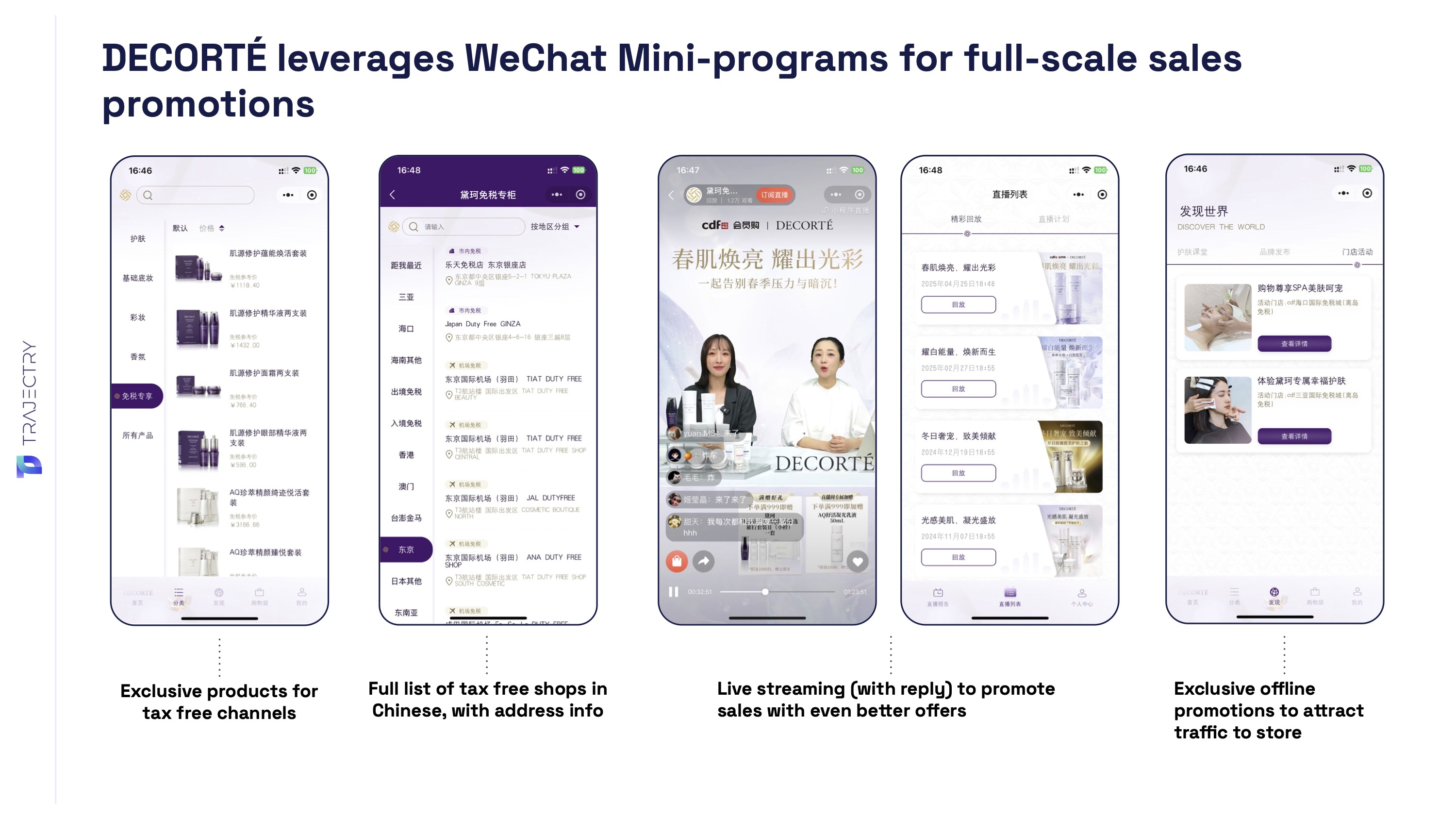
Chinese consumers are famous for bargain hunting, making airport and duty-free locations a high priority during their trips. Travel retail brands are strategically leveraging the WeChat ecosystem, including Mini-Programs and WeCom, to enhance service and drive sales.
A core application is the Convenient Shopping Experience facilitated by the Online-to-Offline (O2O) model, allowing Chinese travelers to pre-order and pay for products online before their trip and pick up goods at designated retail stores or airport locations.
Brands like Hennessy Travel Retail use their Mini-Programs to tag customers when they return to China for continued engagement. La Prairie Travel Retail leverages Mini-Programs for consultant booking and push notifications, while Clarins Travel Retail has deployed interactive virtual booths within a Mini-Program to offer an alternative in-store experience.
4. Travel Tech & Hospitality: Removing the Friction
The utility of WeChat extends beyond retail. In July 2025, Uber launched a WeChat Mini-Program for Chinese tourists, offering a Chinese interface and eliminating foreign payment headaches without requiring a new app download.
Other sectors are following suit:
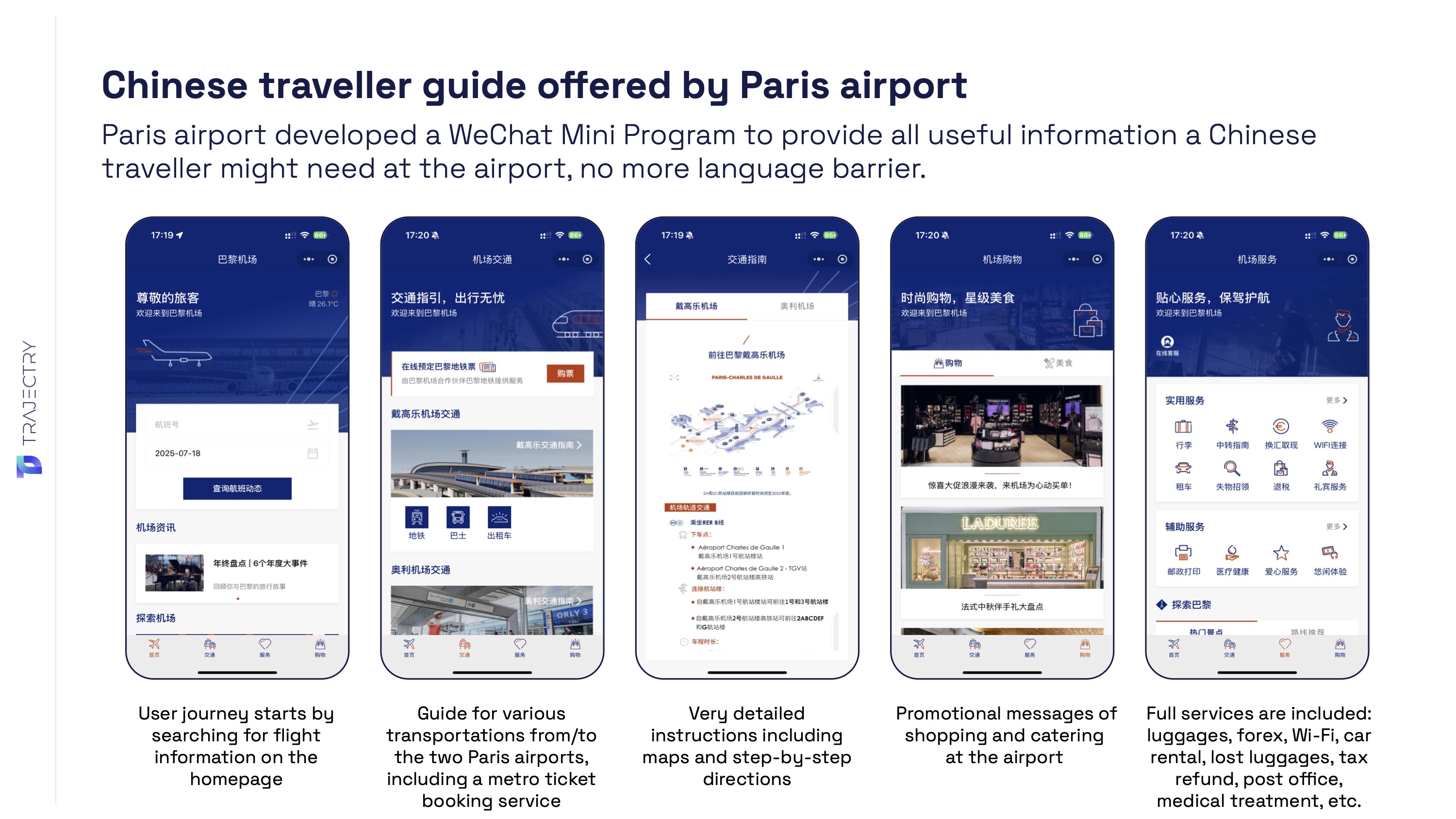
• Airports: Paris airport uses Mini-Programs to provide all useful information a Chinese traveller might need at the airport;
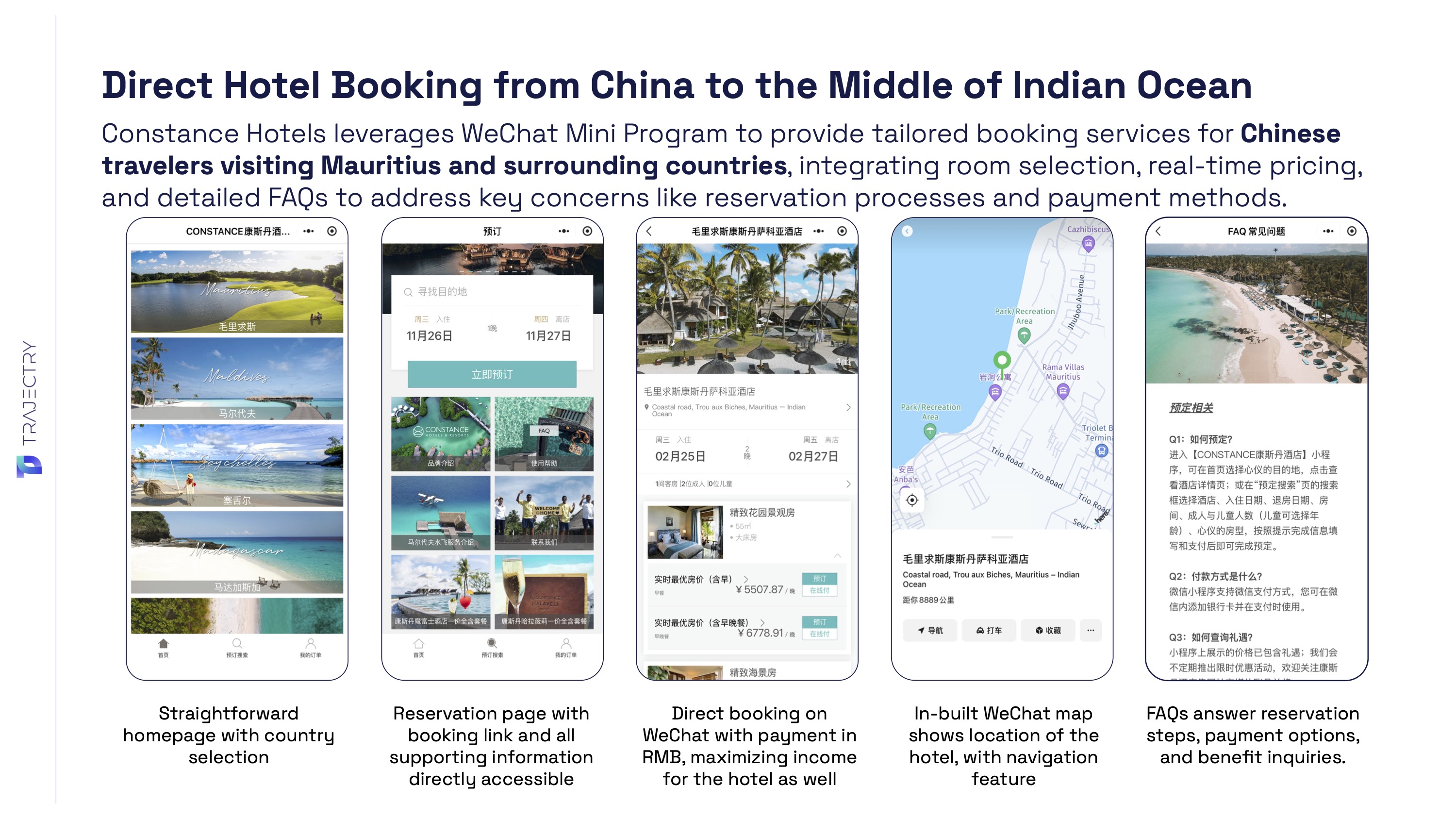
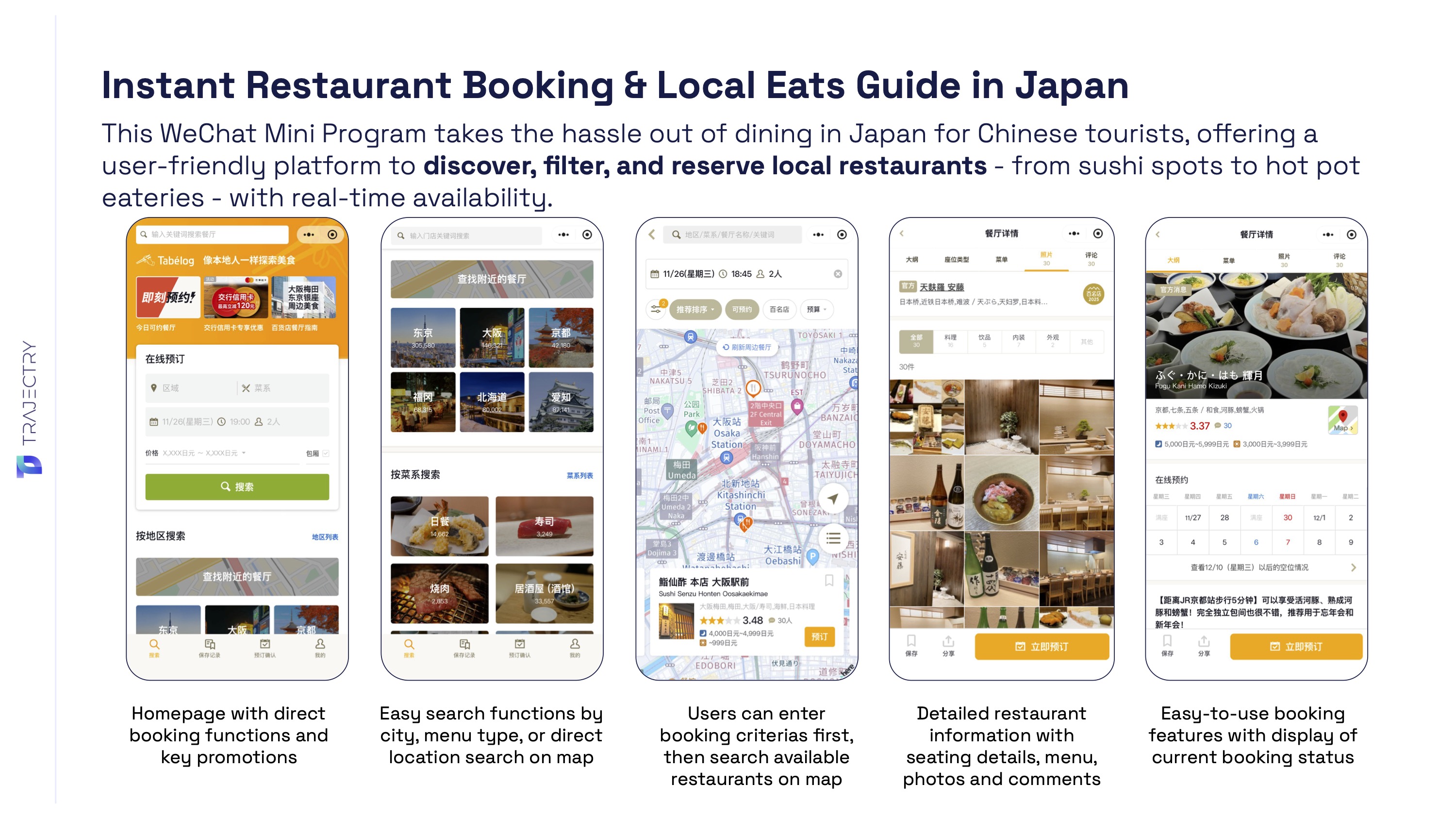
• Hotels & Dining: Boutique hotels and restaurants can offer Chinese interfaces for booking and digital menus. WeChat Pay supports 31 currencies across 74 countries, solving currency exchange hassles;
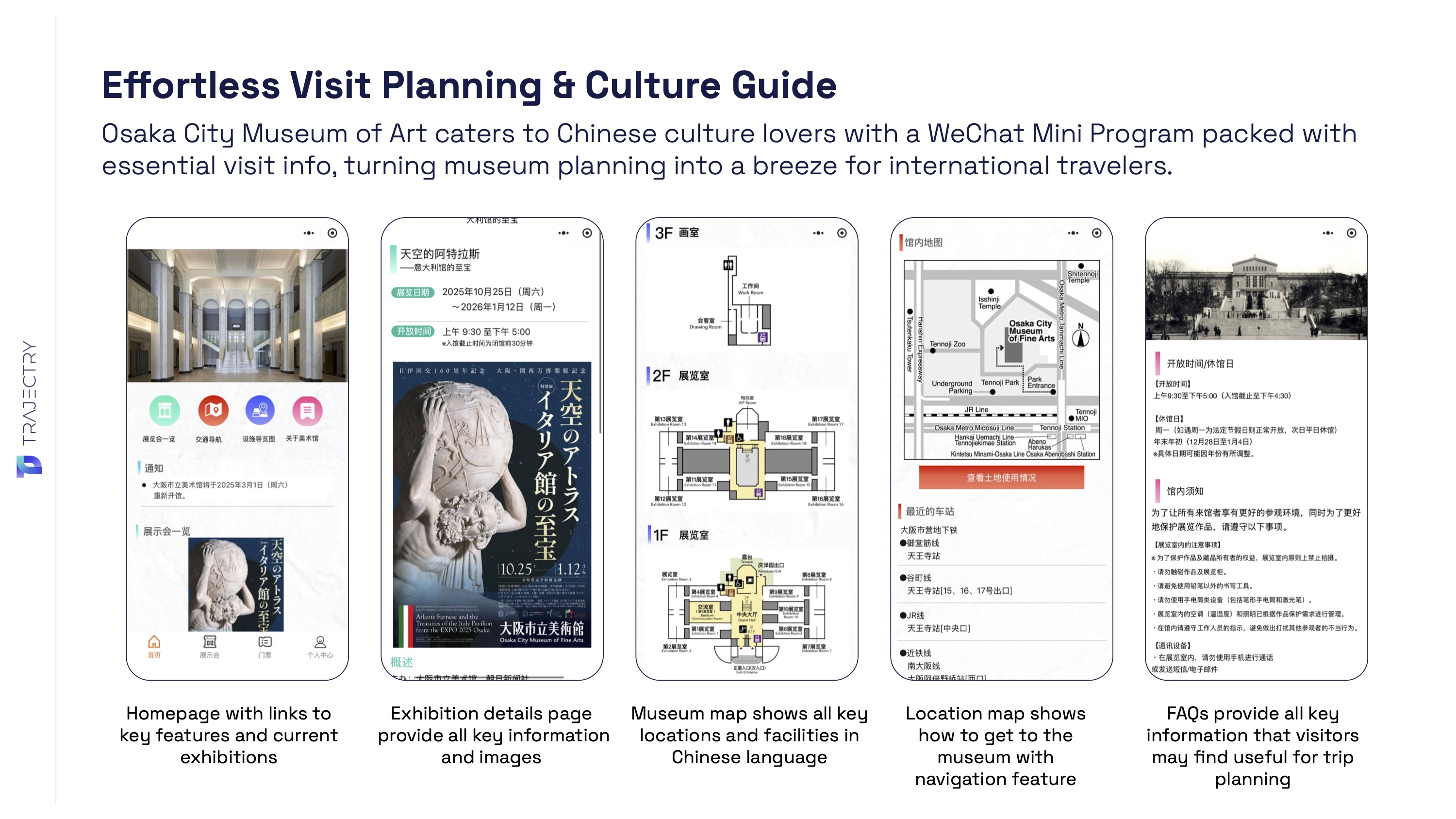
• Museums & Galleries: cater to Chinese culture lovers with a WeChat Mini Program packed with essential visit info, exhibits details, and extended stories, enriching visitor experience to the next level.
5. Marketing & Loyalty: The Power of Social
Leveraging WeChat and WeCom allows for powerful data-driven personalization. Brands can analyze browsing history to offer personalized recommendations and member-specific discounts.
Furthermore, the ecosystem drives word-of-mouth marketing. Users can easily share product info and shopping experiences with their network via WeChat Moments or groups. Brands can also target travelers with precision advertising, driving traffic to their Mini-Programs for limited-time offers or flash sales.
With over 91 countries now leveraging WeChat Mini-Programs to serve global users, active overseas Mini-Programs have surged by 45%. Whether you are in luxury retail, hospitality, or transport, tapping into this ecosystem is not just about "serving" Chinese customers - it is about creating the frictionless, personalized experiences that build loyalty.
At Trajectry, we have spent years helping European businesses design and develop these systems, are you ready to tap into this growing market?